
How durable is SWARCOPLAST G601 in real traffic?
High-performance road markings must not only start strong but also deliver reliable inservice performance over many years. Reason enough for SWARCO Road Marking Systems to compare the outstanding results of the SWARCOPLAST G601 system in the BASt extension tests with a real-world check on the road.
On the rotary traffic simulator at the Federal Highway Research Institute in Germany (BASt), SWARCOPLAST G601 achieves unprecedented values even after 12 million wheel passes. But how does the system perform in daily traffic? To clarify this, the cold plastic system was applied as an edge line on Federal Highway B210 near Wittmund (Germany). In the agglomerate marking laid – as used in the circular test – SWARCO SOLIDPLUS reflective glass beads were used as premix and dropon beads. The field performance test is now intended to show whether the system can also deliver strong values on the road.
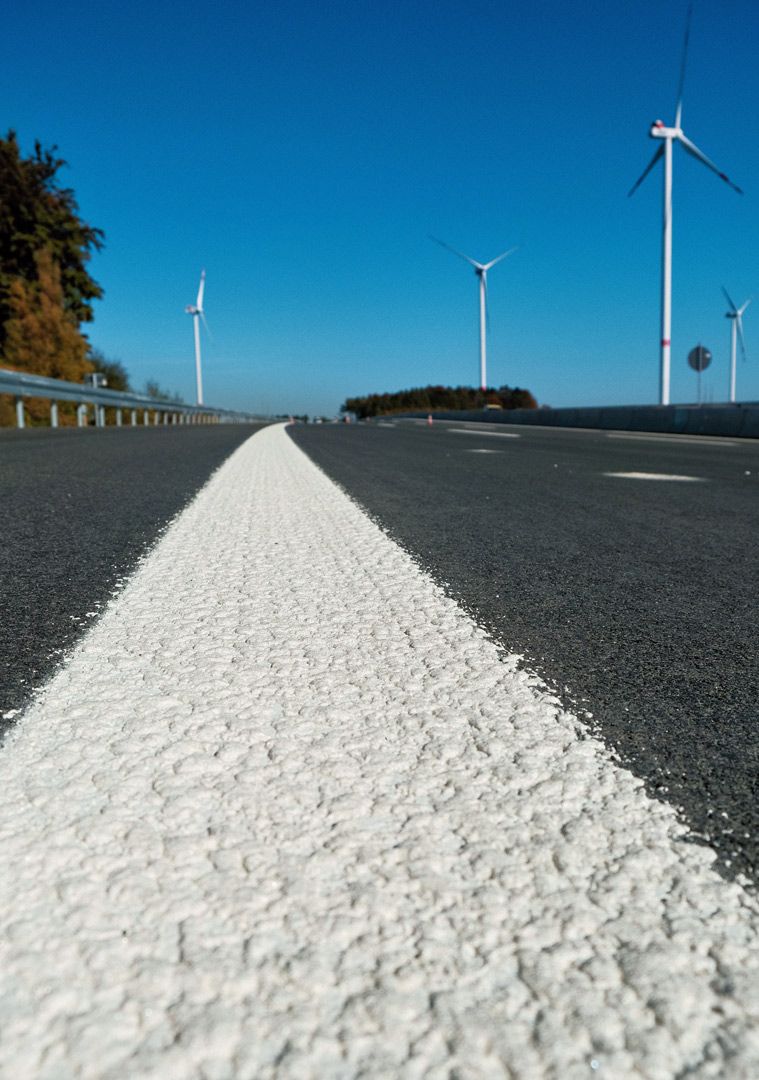
Immediately impressing values
Shortly after application, the first measurements are taken – by a recognised, independent testing institute. As in the laboratory, the initial measurement values are impressive: on this white marking, an RL value relevant for night visibility of 1063 mcd/m²·lx is measured. Equally convincing is the result in wet conditions: 749 mcd/m²·lx are recorded as the RW value. For daytime visibility, a Qd value of 253 is determined. According to EN 1436, the system thus achieves classification in classes Q5, R5 and RW6. These values far exceed the requirements of the ZTV M 13 relevant in Germany. “It is, of course, always good to see such high initial values,” explains Mario Nöllge, Managing Director at SWARCO’s Diez site, where SWARCOPLAST G601 is manufactured. “However, what is decisive is stability over time: how will the values develop over the next two years? And how well does the marking withstand winter maintenance, weather and continuous daily loading? After two years you know more.”
First, however, an interim measurement is taken after one year – in this specific case after exactly 13 months. By then, the marking had already been exposed to a wide range of stresses. In terms of retroreflectivity, SWARCOPLAST G601 still shows remarkable values with RL 754 mcd/m²·lx and RW 172 mcd/m²·lx. It becomes really interesting a further 13 months later – at the second relevant measurement for the field performance test in the in-service condition. Was the multicomponent MMA-based system able to withstand the second winter and the permanent traffic load well?
The final results remain clearly above the required minimum values: an RL value of 498 mcd/m²·lx and an RW result of 113 mcd/m²·lx are determined. This is clear confirmation of the durability of this high-performance road marking system, because with these results the system continues to exceed the required standard values for classes R5 and RW5 according to EN 1436. SWARCOPLAST G601 thus achieves a convincing field performance test.
Measurable Durability
The application on federal highway B210 confirms durability under load: The combination of SWARCOPLAST G601 and SWARCO SOLIDPLUS reflective glass beads delivers excellent initial values and provides consistently high visibility over more than two years. Mario Nöllge is confident: “The 26 months were only the beginning. These measurements have proven that the system is durable – but it has additional reserves. On the circular test facility, it took over 4 million wheel passes until the premix beads were exposed. The proof of this was the measurement values, which rose again, particularly in wet conditions. We assume that this effect will also occur on the road.”

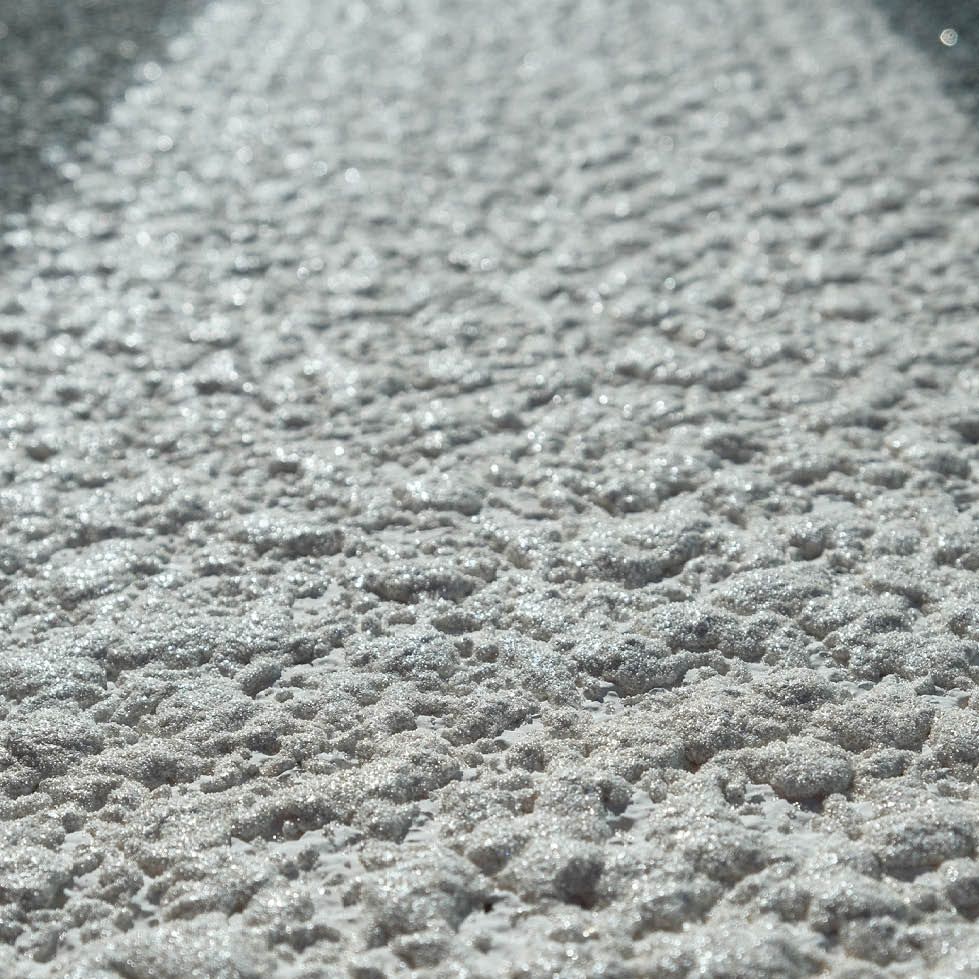
DURABILITY
Durability You Can Trust.
Built to Last.
Designed to Reduce Costs.