
Indoor Floor Markings: Improving Safety in Industrial and Logistics Facilities
Recent workplace accident statistics highlight once again the importance of safe traffic routes in industrial and logistics facilities. Indoor floor markings help companies reduce accident risks, improve operational efficiency and comply with safety requirements. The SWARCO SAFETY-LINE offers a range of solutions to meet these challenges – from highly durable marking paints and low-emission systems to photoluminescent safety markings.
CONTENTS
Safety
Planning
Marking Solutions
Maintenance
Finding the Right System
Q&A
Reading time: approx. 5 min
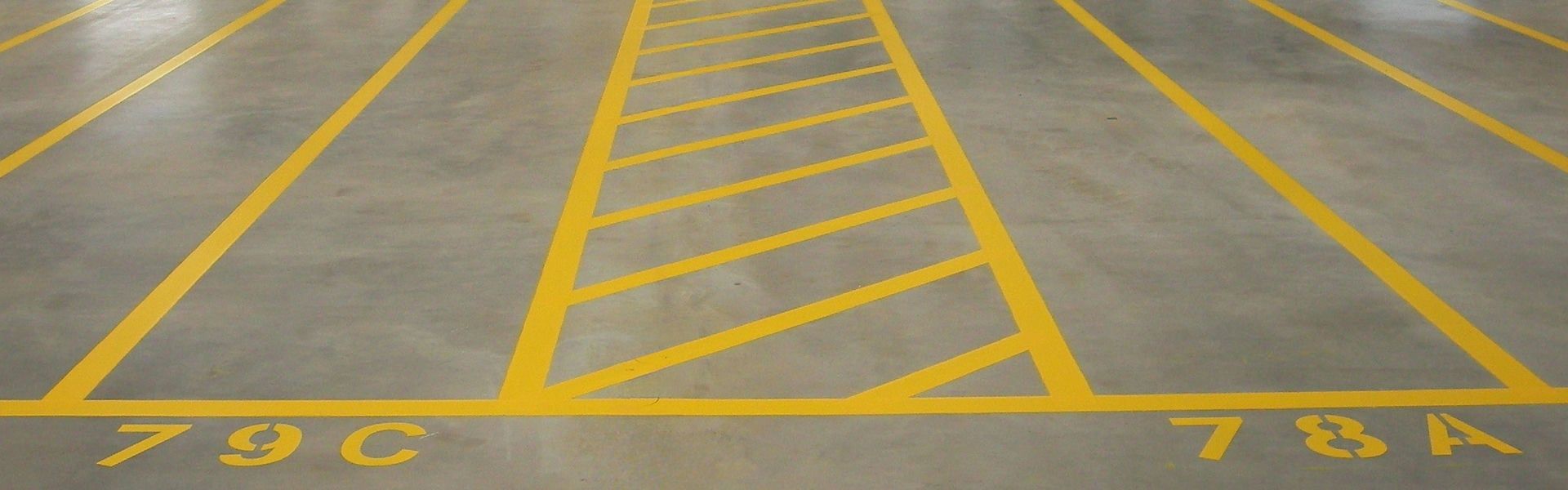
On 17 November 2026, the German Social Accident Insurance (DGUV) published new figures on workplace accidents, revealing alarming figures: In Germany alone, 31,435 reportable workplace accidents involving industrial trucks and material transport carts occurred in internal transport operations in 2025.
Figures from the United States show that this is far from being a problem limited to Germany. According to the National Safety Council, 84 people died in forklift-related workplace accidents involving forklifts and similar industrial trucks in the US in 2024.
While differences in reporting methods make direct comparisons between countries difficult, these statistics highlight one important fact: Safe traffic routes and effective preventive measures are essential worldwide. Wherever forklifts, pallet trucks, automated transport systems and people operate in the same environment, potentially hazardous situations can arise. Intersections, loading zones and crossing points are particularly critical. Professional indoor floor markings help establish clear traffic routes and identify potential hazards in these areas.

"Effective indoor floor markings make traffic routes and designated areas easy to understand at a glance. They help people navigate even complex working environments safely."
Mario Nöllge, SWARCO Road Marking Systems
However, there is an important principle to keep in mind, well summed up by the German industry portal industrie-fachwissen.de: "A line won't stop a forklift." Floor markings are therefore an essential part of a comprehensive safety concept, but their effectiveness depends on how well they work alongside additional protective measures.
What Matters When Planning Indoor Floor Markings?
Effective indoor floor markings start with a well-thought-out concept. Which areas experience heavy traffic? Where do traffic routes intersect? Which areas require particular attention?
In Germany, the Technical Rules for Workplaces, including ASR A1.3 and ASR A1.8, provide important guidance. For example, traffic route boundaries must be clearly visible and continuously marked. One way to achieve this is by using white or yellow lines at least five centimetres wide.
Four factors are particularly important when designing safe and functional indoor floor markings:
- Clear traffic guidance: Clearly separate pedestrian walkways, forklift routes and working areas.
- High visibility: Use high-contrast lines, easily recognisable pictograms and consistent colour schemes.
- Suitable materials: Select marking materials according to traffic loads, substrate characteristics and environmental conditions.
- Long-term performance: Inspect markings regularly and renew them in good time when necessary.
Important: Relevant national safety regulations must be taken into account from the initial planning stage.
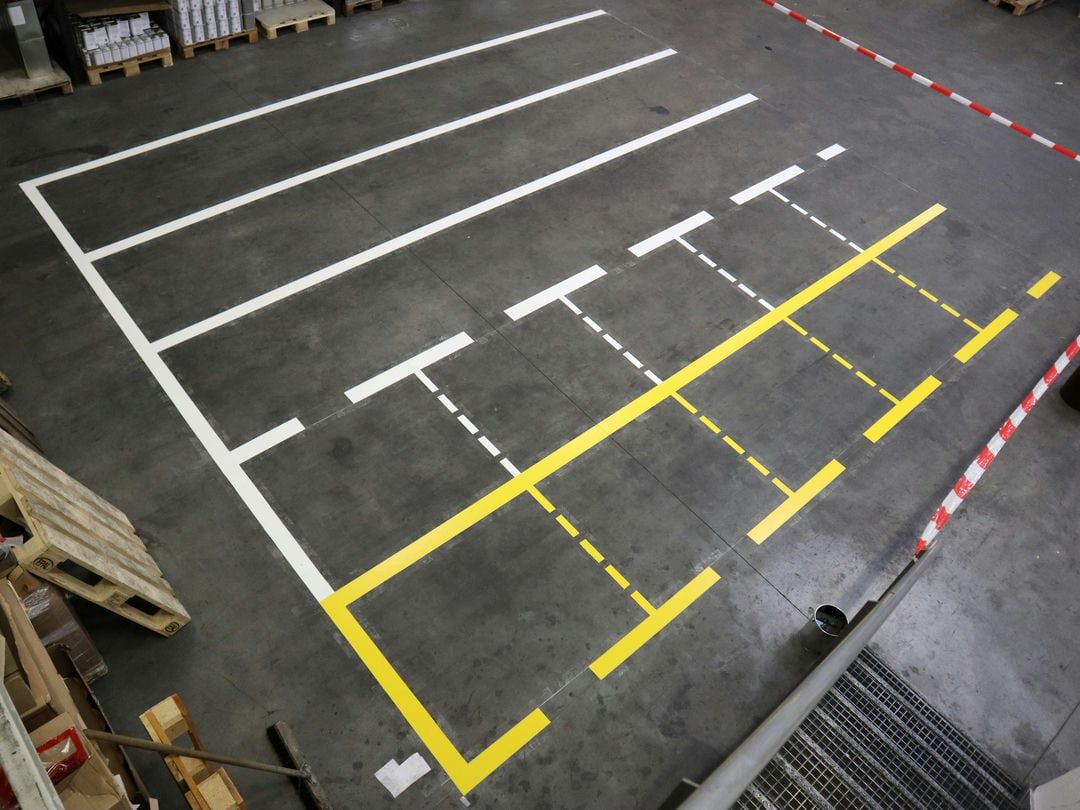
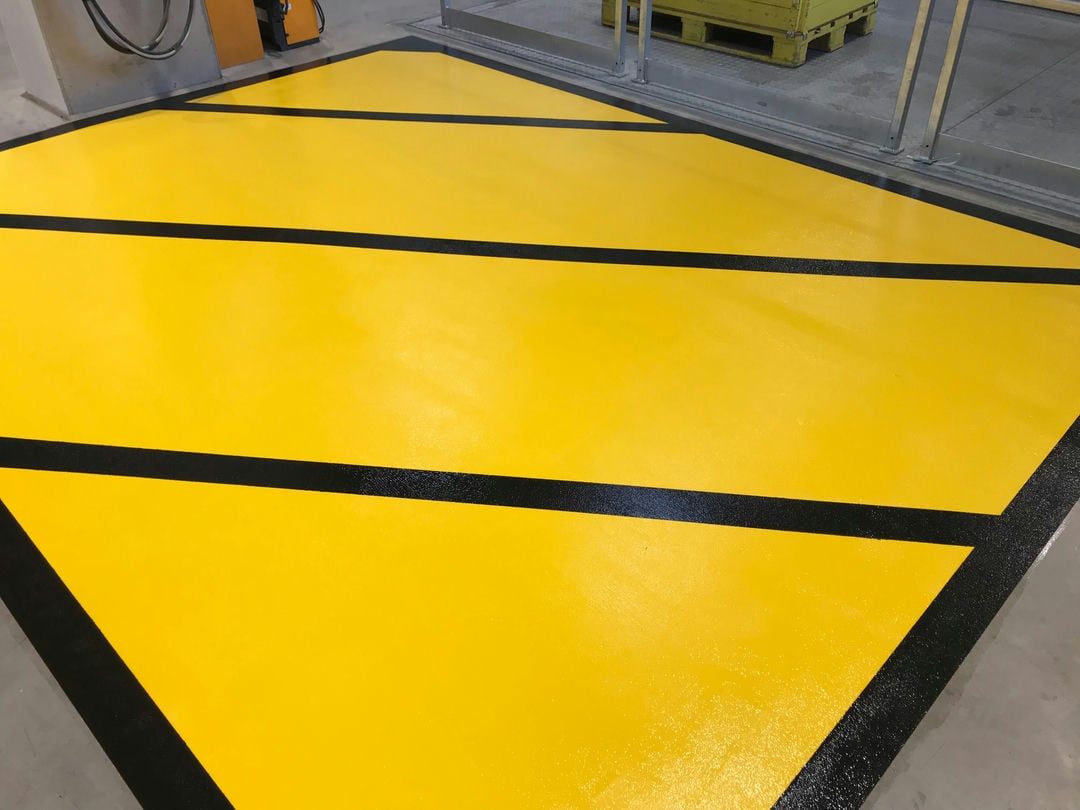
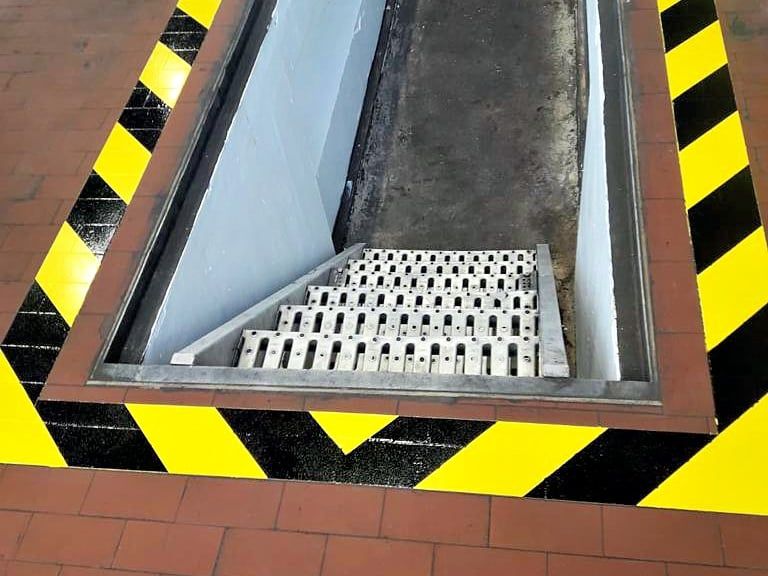
Clearly defined routes, safer areas, better orientation: the versatility of modern floor markings.
Which Floor Marking Solution Is Right for Your Application?
Not all indoor floor markings are exposed to the same conditions. While some areas are mainly used by pedestrians, heavily trafficked routes are subjected to considerable mechanical stress from industrial trucks. Different floor coatings, cleaning procedures and potential chemical exposure place additional demands on the marking materials.
The SWARCO SAFETY-LINE offers a range of marking technologies to meet these different applications and requirements. Alongside high abrasion resistance, minimising operational downtime is often a key consideration. Where a quick return to normal operations is essential, SWARCO AQUALINE ECO 2-K Indoor provides a suitable solution. Under the specified application conditions, this water-based two-component marking paint can withstand vehicle traffic after approximately 50 minutes.
Another important requirement is ensuring that people can find their way safely in an emergency. The photoluminescent SWARCOGLOW systems offer a solution for this as well. SWARCOGLOW markings absorb and store light energy, releasing it again in darkness. Depending on the system configuration, they can remain luminous for up to eight to ten hours, making them a valuable addition to existing emergency escape route signage.
Why Regular Maintenance Is Essential
Even high-quality floor markings are exposed to continuous wear during daily operations. Forklift traffic, mechanical abrasion, cleaning procedures and dirt accumulation can gradually affect their visibility and performance. Regular inspections and the timely renewal of worn markings are therefore just as important as selecting the right materials in the first place.
"A marking can only fulfil its purpose as long as it remains clearly visible. That is why companies should consider not only the initial investment but also durability and long-term maintenance requirements. Choosing the right system can improve both safety and cost-effectiveness over time."
Mario Nöllge, SWARCO Road Marking Systems

Find the Right Solution with SWARCO
Safety, efficiency and cost-effectiveness start with the right floor markings. Whether you need clearly defined traffic routes, highly durable floor markings, low-emission materials or photoluminescent escape route markings, the SWARCO SAFETY-LINE offers a versatile portfolio designed to meet the demands of modern industrial, manufacturing and logistics environments. The right combination of marking material, substrate preparation and application technology helps ensure long-lasting markings that contribute to a safer working environment.
Are you planning new indoor floor markings or looking to improve your existing ones? Let's find the right solution for your specific requirements together.
Questions & Answers
The SWARCO SAFETY-LINE portfolio is suitable for a wide variety of indoor floor markings, from simple lines and large-area markings to pictograms and symbols. It can also be used to identify traffic routes, storage areas and hazardous zones.
The choice of marking material depends on the substrate, its condition and the expected level of wear. Concrete, asphalt and coated industrial floors have different adhesion requirements. Careful substrate assessment, appropriate surface preparation and the selection of a compatible marking system are essential.
The substrate must be sufficiently stable, clean and free from contaminants that could impair adhesion, such as oil, grease or dust. Depending on the type of flooring and marking system, additional preparation steps such as grinding, shot blasting or priming may be required.
Fast-curing marking systems that can quickly withstand vehicle traffic, combined with a phased application approach, help minimise operational disruptions. For example, SWARCO AQUALINE ECO 2-K INDOOR can withstand vehicle traffic after approximately 50 minutes under specified conditions. Temperature, humidity and substrate characteristics all influence the actual time required before the marked area can be reopened to traffic.
In addition to the marking material itself, substrate adhesion, layer thickness, mechanical loads and cleaning procedures all play a crucial role. Forklift traffic, particularly frequent braking and steering movements, can place considerable stress on floor markings. Professional application and the right choice of materials make a significant contribution to their service life.
In addition to temperature, humidity and adequate ventilation, the emissions of the materials used must be considered. Water-based, low-VOC marking systems can help reduce exposure to solvent vapours. Product-specific application conditions, safety data sheets and applicable occupational health and safety regulations must also be observed.