

How We Achieve Net Zero 2050
26 January 2026 – High-performance road markings are essential worldwide for ensuring safe mobility – but they must also be produced and applied with ecological responsibility and a long-term vision. At SWARCO Road Marking Systems, we have always combined performance with sustainability. Since production often relies on energy-intensive processes, this is exactly where we take action: with clear targets, we invest in research into innovative methods and state-of-the-art technology to retool existing plants and, step by step, drive the use of renewable energy and major efficiency gains. Our ambition is to remain high-performing and cost-effective, conserve resources, and consistently reduce emissions.
A Clear Goal Backed by a Concrete Plan
As a Group, SWARCO has set itself a binding target: Net Zero by 2050. This goal is a clear commitment that guides our investments, innovations, and processes. The most effective levers are found where energy demand is highest – at our micro glass bead production sites. Because manufacturing requires substantial natural gas and electricity, we focus our decarbonization measures precisely on these energy-intensive processes. To make the Net Zero goal tangible, a Climate Transition Plan has already been developed for one glass bead production site. It demonstrates that, with unrivalled new technology, the electrification of existing processes, and the gradual replacement of fossil fuels with renewable alternatives, the plant can achieve its target by 2050. SWARCO consciously does not follow a one-way approach but pursues different pathways – technology openness is essential for us. The key includes a smart mix of energy sources, rising efficiency, and a steadily growing share of renewable energy.

The Sun as an Energy Supplier
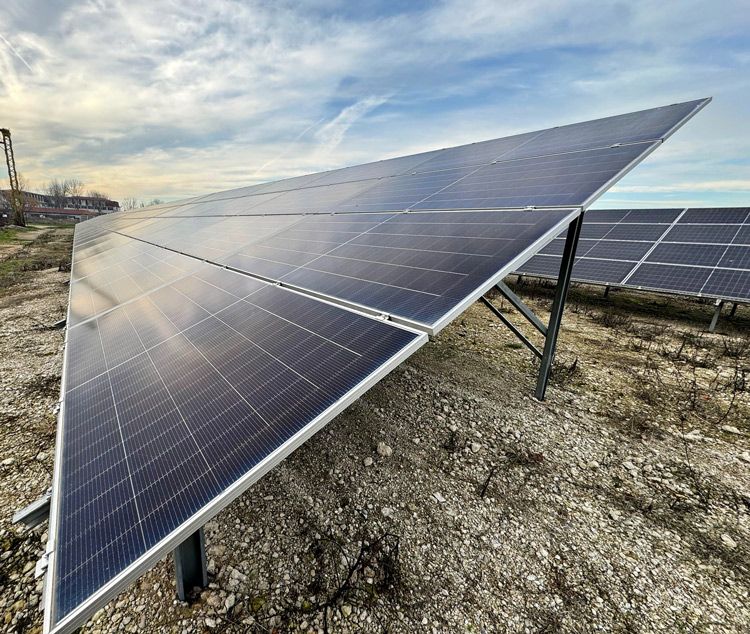
Electrification is only truly sustainable if the electricity required is generated accordingly. That is why SWARCO Road Marking Systems is clearly committed to renewable green power and aims to produce as much of its electrical energy as possible itself. Solar energy is a central building block – a resource that is endlessly available.
With an ambitious PV rollout, SWARCO is installing photovoltaic systems at all European Road Marking Systems locations where suitable areas are available. Currently, a total capacity of 1.8 MWp has been installed at seven sites – a key step toward greater energy self-sufficiency.
A SWARCO production plant in Germany demonstrates the capabilities of modern PV technology: a new photovoltaic system has been installed on the roofs of the production hall. On a sunny day, it covers the entire electricity demand of the site – and even generates surplus capacity that is supplied to neighboring businesses. The highly efficient module technology even enables the coverage of around a quarter of the total electricity consumption in winter.
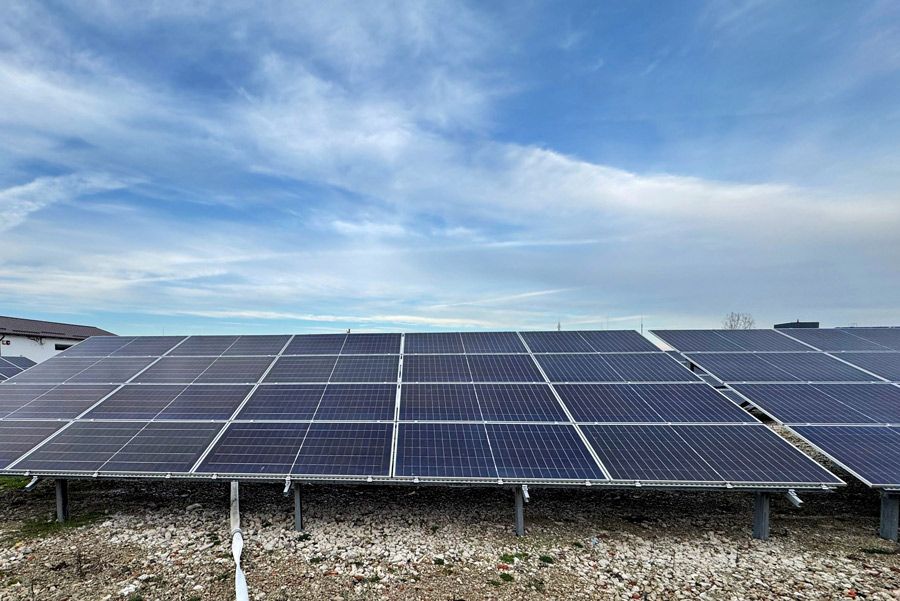
SWARCO is also leveraging existing potential in Romania: at the local production site, previously unused areas of more than 1,700 m² were equipped with PV modules in two phases. The result is impressive: in sunshine, the site generates up to 70% of its required electricity itself. Once the day shift ends, green power surpluses of up to 80% flow into the public grid. Corina Berekmeri, Managing Director at the site, explains: “We have made use of unused areas that were previously not able to contribute to the energy supply. Now, on sunny days, we generate most of our electricity needs ourselves. This proves how quickly sustainability can be put into practice and how effectively it can make a contribution.”
Our PV rollout is not a standalone project, but part of a broader strategy: generating more self-generated power, achieving better efficiency rates, reducing energy consumption, and thus lowering emissions per ton of product produced. These are key prerequisites for robust, future-proof, and affordable production in Europe.
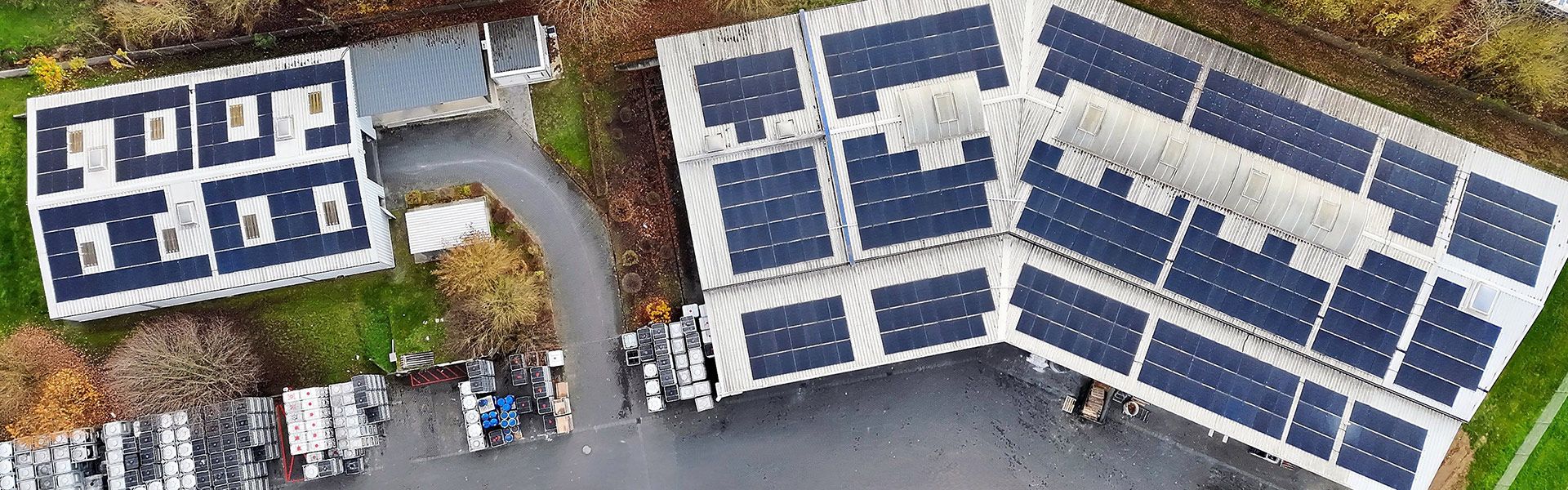
Copyright: enatek
Many Handles for the Right Impact
Sustainability is not created only through major transformations – very often it is the many small steps that are decisive in sum. Additionally, investments in energy-efficient systems often pay for themselves within a short period, depending on the application. They save resources in the long term and reduce costs – a plus for both ecological and economic performance.
Our practical examples clearly demonstrate this:
- Conversion of lighting systems: Even at older office and industrial sites, a lot can be achieved with manageable budgets. Over the past two years, lighting at three additional sites has been consistently converted to LED technology, including the installation of new motion sensors.
- Intelligent thermostats and modern heating controls: These enable individualized, demand-based heat supply and are already being used intensively by two of our companies.
- Training and awareness-raising: Technology is usually only part of the solution. People also need to be informed and inspired. That is why we have begun to continuously train our staff in energy-saving measures – so that efficiency becomes part of everyday practice.
- Battery storage at office and service sites: These make it possible to use self-generated PV electricity outside of sunny hours. This increases energy autonomy while reducing energy costs and improving supply security, as our first installed storage systems show.
Our Path Is Delivering Results
Whether through our Net Zero roadmap, electrification, PV rollout, or smart measures on a smaller scale, all these steps follow a common direction: we are making our production high-performing and ready for the future. With modern technology, investments in research, and a renewable energy mix, we are setting new benchmarks. Responsible production of high-quality road markings, and a future in which sustainability is not an add-on, but the standard.